Nonfiction · 1899
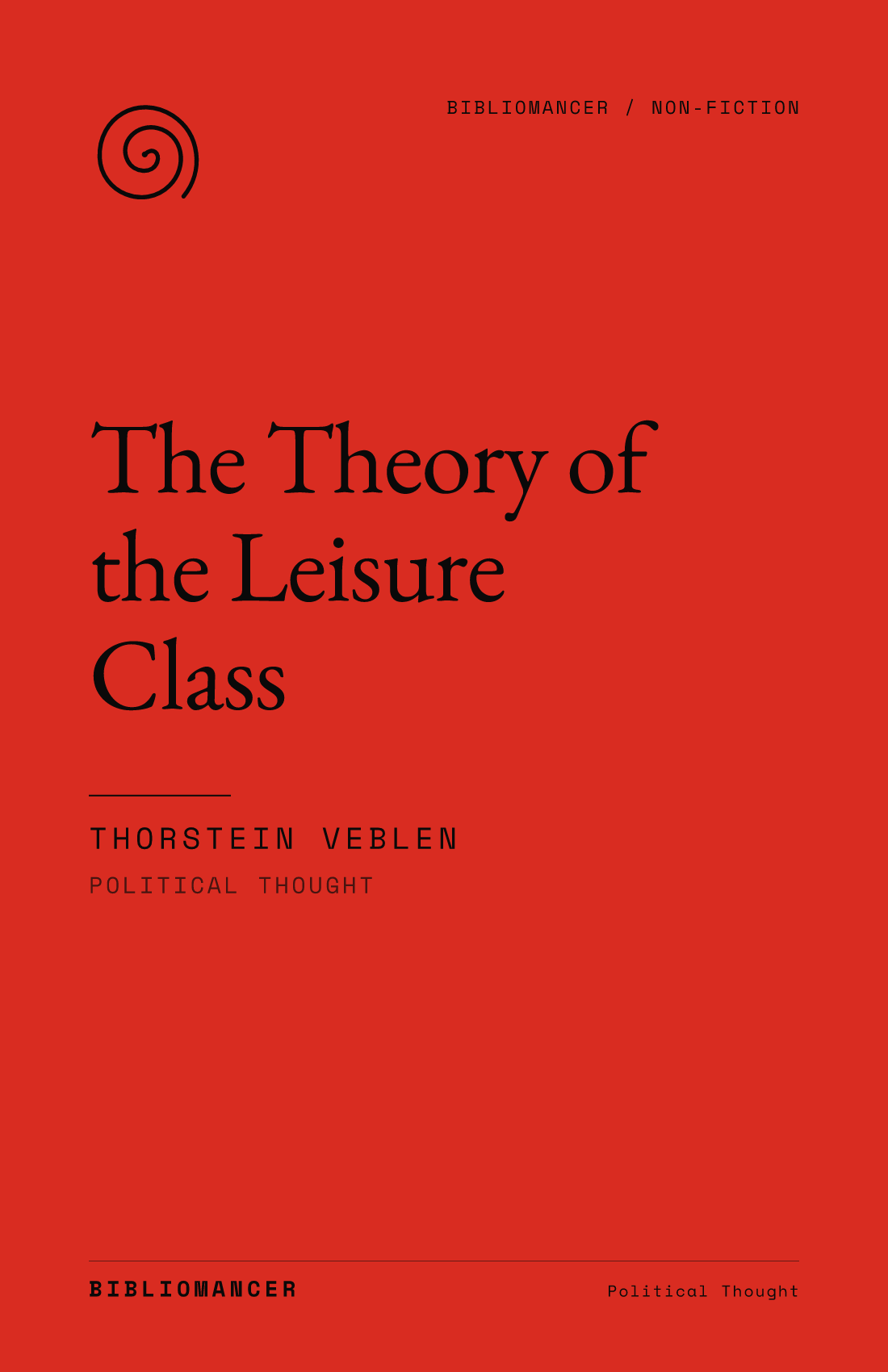
The Theory of the Leisure Class
Thorstein Veblen’s analysis of how the wealthy display their wealth — through “conspicuous consumption” and “conspicuous leisure”, phrases the book put into the language — was published in 1899. It is a work of economics written as anthropology and satire, and it has never stopped being quoted.
Veblen’s argument is that the leisure class is a survival of predatory culture: where a barbarian chief demonstrated his worth by exploit and trophy, his modern successor demonstrates it by waste — by consuming what he cannot use and by employing people to do nothing useful. From that single idea he reads dress, sport, gambling, learning, devout observance, the keeping of servants and the fashion for lawns, in a deadpan he never once breaks.
Contents
- Chapter One — Introductory
- Chapter Two — Pecuniary Emulation
- Chapter Three — Conspicuous Leisure
- Chapter Four — Conspicuous Consumption
- Chapter Five — The Pecuniary Standard of Living
- Chapter Six — Pecuniary Canons of Taste
- Chapter Seven — Dress as an Expression of the Pecuniary Culture
- Chapter Eight — Industrial Exemption and Conservatism
- Chapter Nine — The Conservation of Archaic Traits
- Chapter Ten — Modern Survivals of Prowess
- Chapter Eleven — The Belief in Luck
- Chapter Twelve — Devout Observances
- Chapter Thirteen — Survivals of the Non-Invidious Interests
- Chapter Fourteen — The Higher Learning as an Expression of the Pecuniary Culture
New editions
Never lose your place.
This book is free to read in full, and stays that way. Leave an address: one click confirms it and opens a free account, so your progress and bookmarks sync across every device. You'll also hear when the next restored edition enters the archive. Terminate at any time.
Subjects
About this edition
The text is free of copyright. This edition was prepared from an authoritative digitisation, processed by Bibliomancer under its own review protocol; every automated correction is recorded in its transformation log. Rights assessed for CA, EU, GB, US.
Part of Political Thought.
Source mind
About the author
1857–1929 · Victorian
Thorstein Veblen (1857–1929) was born in Wisconsin to Norwegian immigrant farmers and taught, uneasily, at Chicago, Stanford, Missouri and the New School. The Theory of the Leisure Class (1899) was followed by The Theory of Business Enterprise, The Instinct of Workmanship and The Higher Learning in America; he is the founder of institutional economics.
Adjacent records