Fiction · 1905
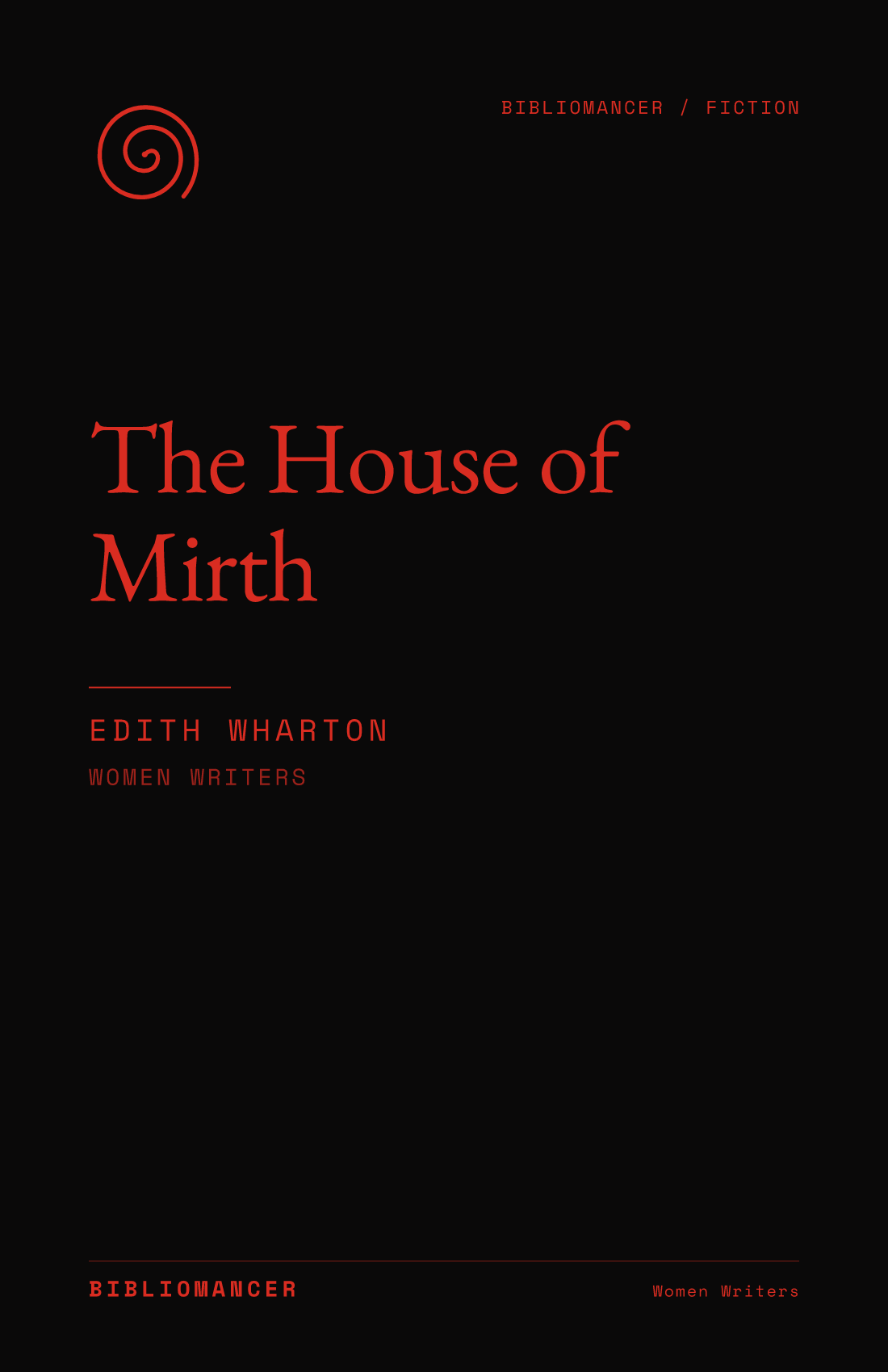
The House of Mirth
Lily Bart is twenty-nine, beautiful, well connected and poor, with perhaps two seasons left in which to marry the money her life requires. Every choice she makes to keep a little of her freedom costs her a little of her position, and New York society keeps exact accounts.
Edith Wharton serialised the novel in Scribner’s Magazine and published it in 1905. It was her first great success and remains the coldest and most precise thing she wrote about the world she was born into.
Wharton lets the arithmetic do the work: a bridge debt, a loan accepted from the wrong man, a letter not destroyed — and a woman who is never once offered a choice that is not already a trap. Both books are given complete.
Contents
New editions
Never lose your place.
This book is free to read in full, and stays that way. Leave an address: one click confirms it and opens a free account, so your progress and bookmarks sync across every device. You'll also hear when the next restored edition enters the archive. Terminate at any time.
Subjects
About this edition
The text is free of copyright. This edition was prepared from an authoritative digitisation, processed by Bibliomancer under its own review protocol; every automated correction is recorded in its transformation log. Rights assessed for CA, EU, GB, US.
Part of Women Writers.
Source mind
About the author
1862–1937 · Modern
Edith Wharton (1862–1937) was born Edith Newbold Jones into old New York society, published her first book, on interior decoration, in 1897, and her first novel in 1902. The House of Mirth (1905), Ethan Frome (1911), The Custom of the Country (1913) and The Age of Innocence (1920), which won the Pulitzer Prize, are the best known of more than forty books. She lived in France from 1907 and was decorated for her relief work in the First World War.
Adjacent records