Nonfiction · about 375 BC
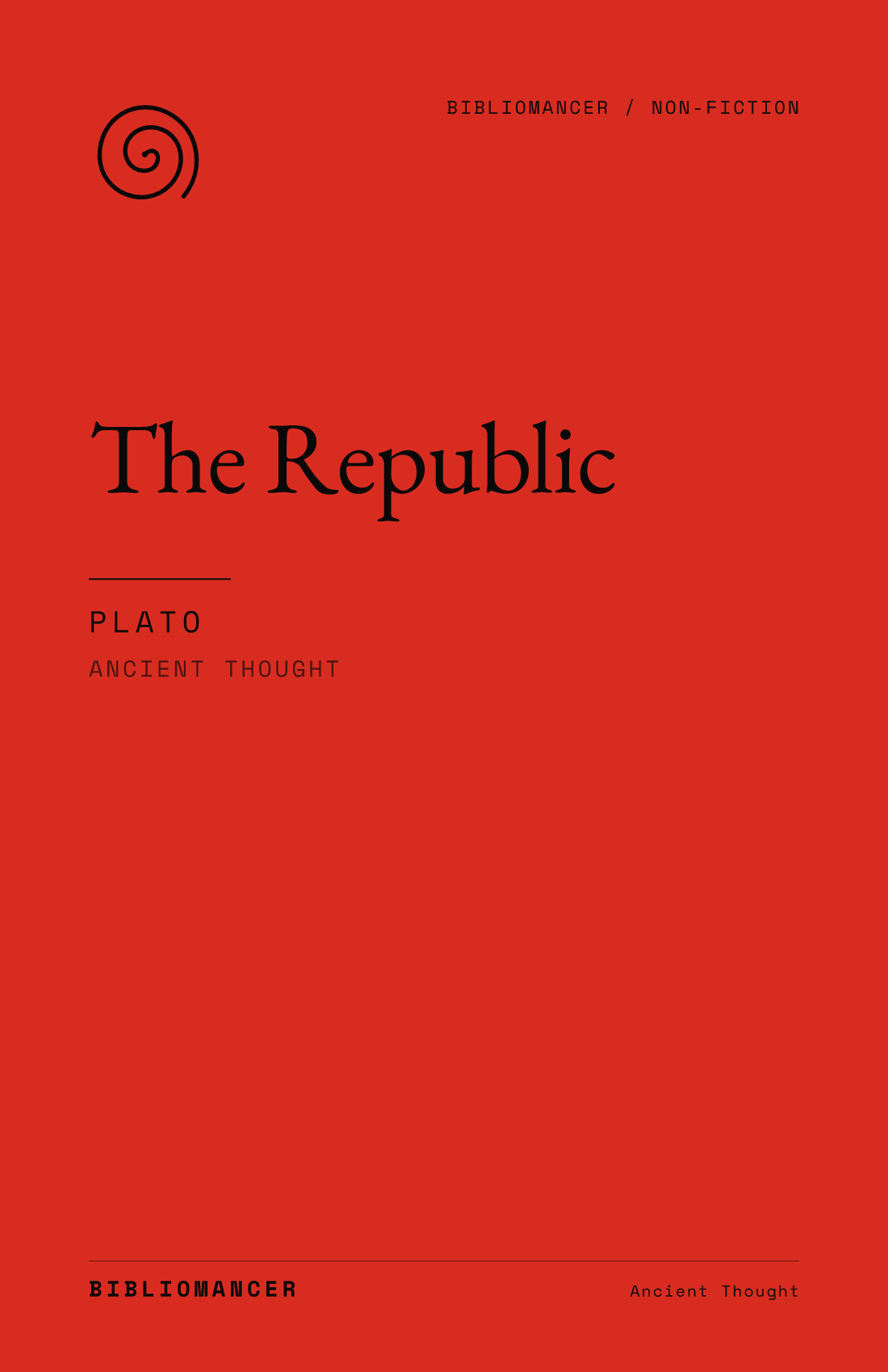
The Republic
Plato · translated by Benjamin Jowett
A conversation in the Piraeus about what justice is becomes, over ten books, the design of an ideal city and of the soul that would inhabit it — the rule of philosophers, the education of guardians, the allegory of the cave, the critique of poetry, the myth of Er. Plato’s Republic, written in the fourth century BC, is the most read work of ancient philosophy.
This edition uses Benjamin Jowett’s English translation, first published in 1871, together with his long introduction and analysis, which made Plato accessible to generations of English readers.
Bibliomancer presents the complete text: Jowett’s introduction and all ten books.
Contents
New editions
Never lose your place.
This book is free to read in full, and stays that way. Leave an address: one click confirms it and opens a free account, so your progress and bookmarks sync across every device. You'll also hear when the next restored edition enters the archive. Terminate at any time.
Subjects
About this edition
The text is free of copyright. This edition was prepared from an authoritative digitisation, processed by Bibliomancer under its own review protocol; every automated correction is recorded in its transformation log. Rights assessed for CA, EU, GB, US.
Part of Ancient Thought.
Source mind
About the author
-428–-348 · Ancient
Plato (c. 428–348 BC) was an Athenian, a pupil of Socrates, and the founder of the Academy, the school that gave the word its meaning. His dialogues — among them the Apology, Phaedo, Symposium, Republic, Phaedrus, Theaetetus, Timaeus and Laws — are the foundation of Western philosophy, and they have survived complete, which is true of almost no other ancient writer. The English here is Benjamin Jowett’s: the Master of Balliol whose translation of the Dialogues (1871) carried Plato to English readers for a century, and whose introductions are printed with it.
Adjacent records