Fiction · 1749
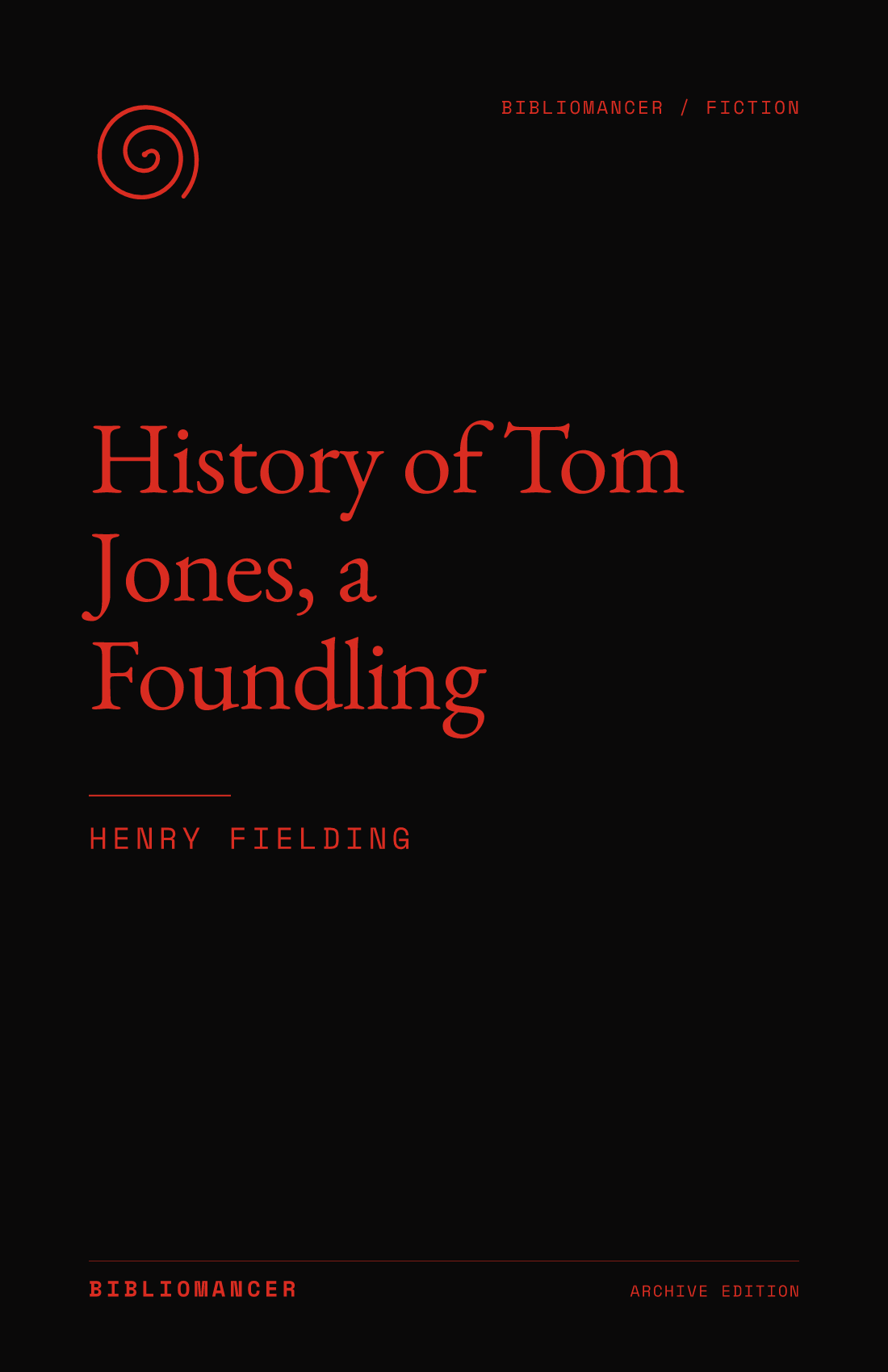
History of Tom Jones, a Foundling
Squire Allworthy finds an infant boy in his own bed one night and raises him as his own, alongside his sister's legitimate son, the sanctimonious Blifil, who never lets him forget it. Tom grows up goodhearted, impulsive, and hopelessly in love with the neighboring squire's daughter, Sophia Western. When Blifil's scheming gets him cast out, Tom sets off for London, and Sophia, refusing to marry the man her father has chosen, runs off after him.
Fielding published The History of Tom Jones, a Foundling in 1749; it is regarded as one of the first great comic novels in English, celebrated for its intricate plotting and its narrator's running commentary on the art of novel-writing itself.
Bibliomancer restores the 1749 text exactly as Fielding wrote it.
Contents
- Dedication
- Introductory
- Book I
- Chapter I — The introduction to the work, or bill of fare to the feast
- Chapter II
- Chapter III
- Chapter IV
- Chapter V
- Chapter VI
- Chapter VII
- Chapter VIII
- Chapter IX
- Chapter X
- Chapter XI
- Chapter XII
- Chapter XIII
- Book II
- Chapter I
- Chapter II
- Chapter III
- Chapter IV
- Chapter V
- Chapter VI
- Chapter VII
- Chapter VIII
- Chapter IX
- Book III
- Chapter I — Containing little or nothing
- Chapter II
- Chapter III
- Chapter IV
- Chapter V
- Chapter VI
- Chapter VII
- Chapter VIII
- Chapter IX
- Chapter X
- Book IV — Containing the Time of a Year
- Chapter I — Containing five pages of paper
- Chapter II
- Chapter III
- Chapter IV
- Chapter V — Containing matter accommodated to every taste
- Chapter VI
- Chapter VII
- Chapter VIII
- Chapter IX
- Chapter X
- Chapter XI
- Chapter XII
- Chapter XIII
- Chapter XIV
- Book V — Containing a Portion of Time Somewhat Longer Than Half a Year
- Chapter I
- Chapter II
- Chapter III
- Chapter IV
- Chapter V
- Chapter VI
- Chapter VII
- Chapter VIII — Containing matter rather natural than pleasing
- Chapter IX
- Chapter X
- Chapter XI
- Chapter XII
- Book VI — Containing About Three Weeks
- Chapter I — Of love
- Chapter II
- Chapter III — Containing two defiances to the critics
- Chapter IV — Containing sundry curious matters
- Chapter V
- Chapter VI
- Chapter VII
- Chapter VIII — The meeting between Jones and Sophia
- Chapter IX
- Chapter X
- Chapter XI
- Chapter XII — Containing love-letters, &c
- Chapter XIII
- Chapter XIV
- Book VII — Containing Three Days
- Chapter I
- Chapter II
- Chapter III — Containing several dialogues
- Chapter IV
- Chapter V
- Chapter VI — Containing great variety of matter
- Chapter VII
- Chapter VIII
- Chapter IX
- Chapter X
- Chapter XI
- Chapter XII
- Chapter XIII
- Chapter XIV
- Chapter XV — The conclusion of the foregoing adventure
- Book VIII — Containing About Two Days
- Chapter I
- Chapter II
- Chapter III
- Chapter IV
- Chapter V
- Chapter VI
- Chapter VII
- Chapter VIII
- Chapter IX
- Chapter X
- Chapter XI
- Chapter XII
- Chapter XIII
- Chapter XIV
- Chapter XV
- Book IX — Containing Twelve Hours
- Chapter I
- Chapter II
- Chapter III
- Chapter IV
- Chapter V
- Chapter VI
- Chapter VII
- Book X — In Which the History Goes Forward About Twelve Hours
- Chapter I
- Chapter II
- Chapter III
- Chapter IV
- Chapter V
- Chapter VI
- Chapter VII
- Chapter VIII — In which the history goes backward
- Chapter IX — The escape of Sophia
- Book XI — Containing About Three Days
- Chapter I — A crust for the critics
- Chapter II
- Chapter III
- Chapter IV — The history of Mrs Fitzpatrick
- Chapter V
- Chapter VI
- Chapter VII
- Chapter VIII
- Chapter IX
- Chapter X
- Book XII — Containing the Same Individual Time with the Former
- Chapter I
- Chapter II
- Chapter III
- Chapter IV — The adventure of a beggar-man
- Chapter V
- Chapter VI
- Chapter VII
- Chapter VIII
- Chapter IX
- Chapter X
- Chapter XI
- Chapter XII
- Chapter XIII — A dialogue between Jones and Partridge
- Chapter XIV
- Book XIII — Containing the Space of Twelve Days
- Chapter I — An Invocation
- Chapter II
- Chapter III
- Chapter IV — Which consists of visiting
- Chapter V
- Chapter VI
- Chapter VII
- Chapter VIII
- Chapter IX
- Chapter X
- Chapter XI
- Chapter XII
- Book XIV — Containing Two Days
- Chapter I
- Chapter II
- Chapter III — Containing various matters
- Chapter IV
- Chapter V
- Chapter VI
- Chapter VII — The interview between Mr Jones and Mr Nightingale
- Chapter VIII
- Chapter IX — Containing strange matters
- Chapter X
- Book XV — In Which the History Advances About Two Days
- Chapter I — Too short to need a preface
- Chapter II
- Chapter III
- Chapter IV
- Chapter V
- Chapter VI
- Chapter VII
- Chapter VIII — Short and sweet
- Chapter IX — Containing love-letters of several sorts
- Letter I
- Letter II
- Letter III
- Chapter X
- Chapter XI — Containing curious, but not unprecedented matter
- Chapter XII — A discovery made by Partridge
- Book XVI — Containing the Space of Five Days
- Chapter I — Of prologues
- Chapter II
- Chapter III
- Chapter IV
- Chapter V
- Chapter VI
- Chapter VII
- Chapter VIII — Schemes of Lady Bellaston for the ruin of Jones
- Chapter IX
- Chapter X — The consequence of the preceding visit
- Book XVII — Containing Three Days
- Chapter I — Containing a portion of introductory writing
- Chapter II
- Chapter III
- Chapter IV
- Chapter V — Mrs Miller and Mr Nightingale visit Jones in the prison
- Chapter VI
- Chapter VII
- Chapter VIII — Containing various matters
- Chapter IX — What happened to Mr Jones in the prison
- Book XVIII — Containing About Six Days
- Chapter I — A farewel to the reader
- Chapter II — Containing a very tragical incident
- Chapter III
- Chapter IV
- Chapter V — In which the history is continued
- Chapter VI — In which the history is farther continued
- Chapter VII — Continuation of the history
- Chapter VIII — Further continuation
- Chapter IX — A further continuation
- Chapter X
- Chapter XI
- Chapter XII — Approaching still nearer to the end
- Chapter the last — In which the history is concluded
New editions
Never lose your place.
This book is free to read in full, and stays that way. Leave an address: one click confirms it and opens a free account, so your progress and bookmarks sync across every device. You'll also hear when the next restored edition enters the archive. Terminate at any time.
Subjects
About this edition
The text is free of copyright. This edition was prepared from an authoritative digitisation, processed by Bibliomancer under its own review protocol; every automated correction is recorded in its transformation log. Rights assessed for CA, EU, GB, US.
Source mind
About the author
1707–1754 · Enlightenment
Henry Fielding (1707–1754) was born at Sharpham Park in Somerset and educated at Eton; he wrote more than two dozen plays for the London stage until the Licensing Act of 1737 closed off that career, then trained as a barrister and turned to fiction, publishing the parody Shamela (1741), Joseph Andrews (1742) and The History of Tom Jones, a Foundling (1749). As London's chief magistrate he founded the Bow Street Runners with his half-brother John in 1749. Worn out by gout and dropsy, he sailed for Lisbon in 1754 to recover his health, died there that October, and left an account of the voyage published posthumously as The Journal of a Voyage to Lisbon (1755).
Adjacent records